
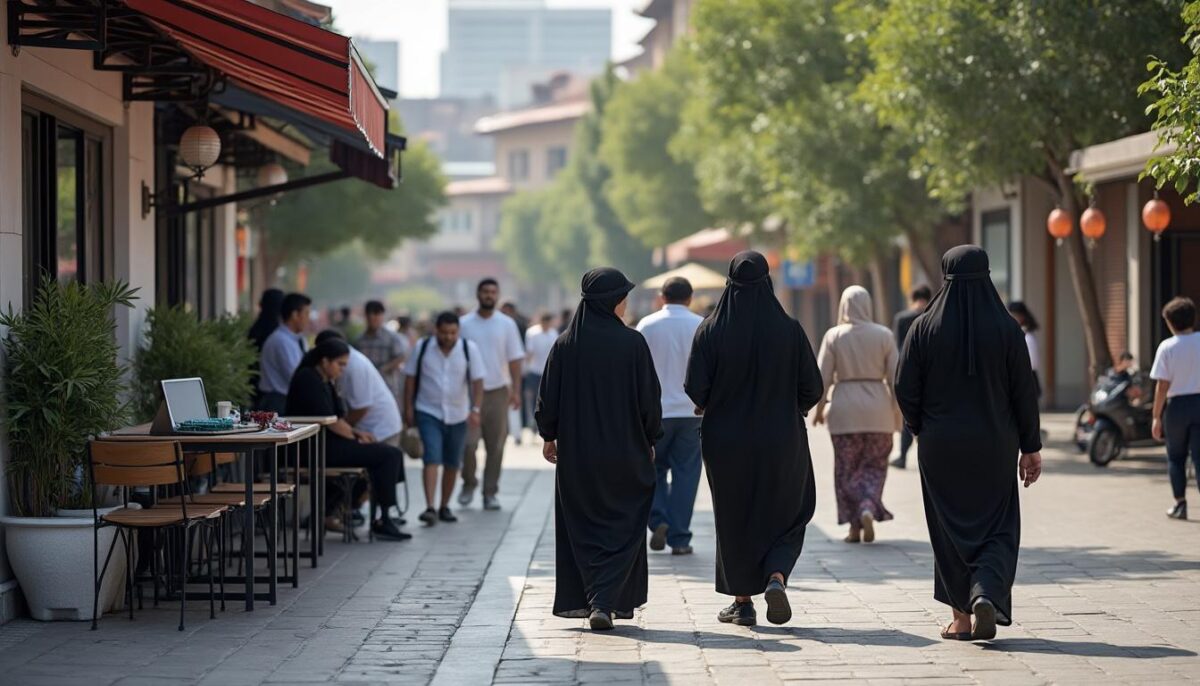
This country bans certain clothing
Hello everyone, my name is Noémie. Before choosing your travel clothes, check the rules of the country and the places you plan to visit: a legal requirement, a temple instruction and a simple clothing recommendation are not the same thing. There is no universal list of prohibited clothing. Here are some examples and a method for packing without relying on misconceptions.
To better understand the implications of these laws and which countries are concerned, it is essential to have a clear, practical overview, especially for travelers. This can help you avoid embarrassing situations and even legal trouble. To prepare further before setting off, feel free to read my articles on respecting cultural codes when traveling and how to decipher local social norms, two essential keys to traveling with respect and without stress.
Countries where clothing is strictly regulated: an overview
In Saudi Arabia, the UK FCDO advises wearing loose-fitting clothing that covers the elbows and falls below the knees. Female travelers are not generally required to wear an abaya or cover their hair; specific instructions may apply depending on the location. In Iran, France Diplomatie states that women, including foreign women, must cover their hair and wear long, loose-fitting clothing in public; men must wear long trousers.
In the Maldives, distinguish between resorts, inhabited islands and beaches designated for tourists: don’t assume that swimwear is allowed everywhere. The FCDO sets out clothing standards outside resorts and notes that nudism and toplessness are prohibited, including at resorts. Check the signs and your accommodation’s instructions for the specific beach.
Dress codes: a reflection of culture and religion
A place of worship may require shoulders or legs to be covered, shoes to be removed, or specific clothing to be worn at the entrance, without that rule applying throughout the country. Bring a light, covering layer, but check the site’s instructions: a simple shawl may not necessarily be enough everywhere.
Rules vary depending on the destination, location and situation. Avoid presenting a country’s customs as uniform or assuming that a tourist will automatically be shown leniency. Outdated information about a penalty does not prove that it still applies.
What to wear when traveling: things to check for your destination
| Destination | Point to watch | Useful check | Key takeaway |
|---|---|---|---|
| Saudi Arabia | Loose-fitting, covering clothing in public | Official travel advice and the location’s instructions | According to the FCDO, female travelers are not generally required to wear an abaya or headscarf |
| Iran | Women must cover their hair and wear long, loose-fitting clothing | France Diplomatie: useful information and safety | Travel to the country is strongly discouraged for French nationals at the time of this check |
| Maldives | Differences between resorts, inhabited islands and permitted beaches | Instructions from the beach and accommodation | Do not assume the rules at one resort apply to the whole island |
| Afghanistan | Security situation takes priority | France Diplomatie: safety | Travel to the entire country is strongly discouraged |
| Sudan | Conflict and security situation take priority | France Diplomatie: safety | Travel to the entire country is strongly discouraged |
Respecting the law: the key to a successful trip
Checked on November 13, 2026: France Diplomatie strongly advises against travel to Iran, Afghanistan and Sudan. Choosing what to wear does not resolve these risks. Also check the advisories issued by the authorities of your country of residence or nationality, then check for updates before any departure.
- Find out exactly what the local dress codes are before you leave.
- Opt for loose-fitting, covering clothing in conservative countries.
- Respect religious sites by following the required dress code.
- Take local laws into account to avoid legal penalties.
- Pack a versatile headscarf or shawl so you can adapt easily.
How can I tell whether an item of clothing is prohibited or simply discouraged?
Check the laws and customs section of official travel advice, then check the instructions for the place you plan to visit. Requirements for a public space, beach or religious site may differ.
Are tourists penalized?
Tourist status does not exempt you from complying with regulations. Depending on the place and the circumstances, you may be denied entry or penalized; do not assume you are guaranteed to receive only a warning.
Why do these prohibitions exist?
They are linked to the religion, culture and social norms of the countries, and are intended to preserve modesty and public order.
How can I avoid problems while traveling?
Find out about local dress codes well in advance, dress accordingly and always follow the instructions at religious or public sites.
What should I do if someone tells me off?
Stay calm, ask which instruction applies and adjust your clothing if necessary. If you encounter a serious difficulty, contact the relevant consular authorities; this does not replace the need to respect local laws.
Thanks again for your attention. Yours, Noémie